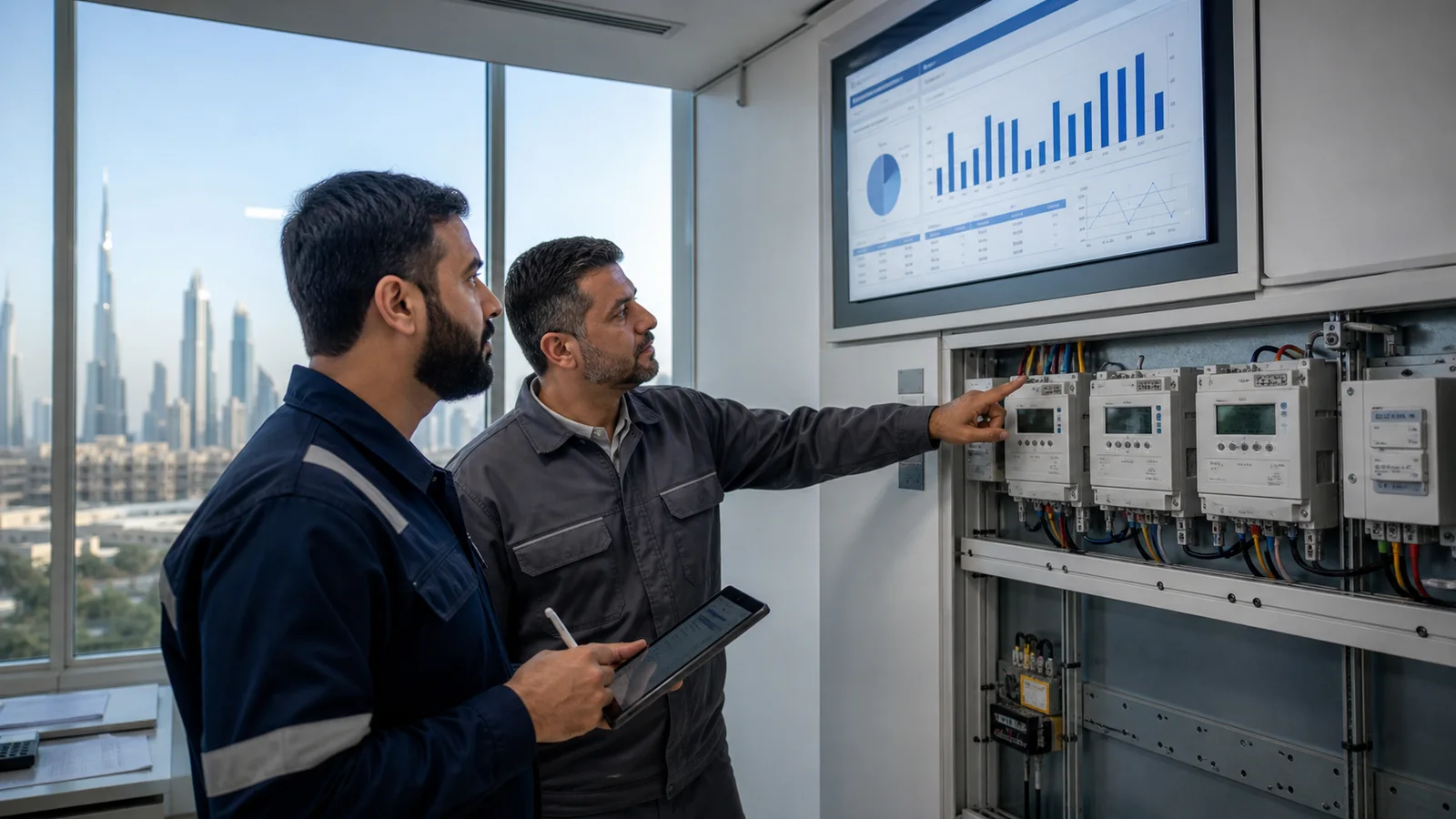
An energy-efficiency baseline is the agreed reference against which a building measures change. For a UAE owner preparing an HVAC retrofit, controls upgrade, solar project or metering programme, the useful baseline is not simply last year's utility bill. It is a documented set of meter readings, operating conditions, boundaries, assumptions and data-quality rules that another reviewer can reproduce.
This matters as the UAE moves from energy-efficiency commitments toward implementation. In September 2026, the Ministry of Energy and Infrastructure convened the first technical roundtable of the Global Energy Efficiency Alliance around practical solutions, pilot projects, validation, financing and measurable outcomes. A project becomes easier to approve, fund and verify when its starting point is credible.
Source context: reviewed on 8 September 2026 using the Emirates News Agency report on the first GEEA technical roundtable, the UAE Ministry of Energy and Infrastructure comments at Middle East Energy 2026, and the US Department of Energy's measurement and verification overview. The workflow below is ConnectME's practical project guidance, not a UAE regulatory requirement or a guarantee of savings.
What should an energy baseline answer?
A decision-ready baseline should answer four questions: what was measured, where the measurement boundary sits, which operating conditions affected consumption, and how the team will compare the post-project period with the reference period. If any answer exists only in one engineer's spreadsheet, the baseline is not yet durable.
1. Begin with the decision, not the dashboard
Write down the decision the data must support. A whole-building investment case needs a different boundary from a chilled-water plant optimisation exercise. Tenant cost allocation, equipment fault detection and carbon reporting also use different evidence. One platform may support all four, but the baseline design should not blur their purposes.
- Define the proposed measure and the equipment or area it affects.
- Name the financial, operational or compliance decision that will use the result.
- Agree the reporting interval and comparison period before collecting data.
- Identify who will accept the baseline and who can approve later adjustments.
2. Draw a measurement boundary
Mark the incoming electricity, water, gas and district-cooling meters, then map relevant sub-meters and plant points. For an air-handling-unit project, the boundary may include fan electricity, chilled-water energy, airflow and operating hours. For a building-wide programme, the owner may use utility meters and selected sub-metering to explain major loads.
Record meter model, serial number, location, served load, unit, multiplier, communication path and expected interval. Link every point to one durable asset ID. A clear meter register prevents an apparently complete dataset from mixing different loads or replacement devices.
3. Test the evidence before modelling it
Data quantity is not data quality. Before calculating a trend, check whether timestamps are aligned, units are consistent and readings are actually changing. Review gaps, duplicates, counter rollovers, negative values, flatlines and sudden step changes. Document meter replacements, tariff changes and periods when a gateway replayed stored data.
A practical quality summary should report expected readings, readings received, valid readings, estimated intervals and unresolved exceptions. Preserve raw values alongside corrected values so a reviewer can follow every adjustment.
4. Capture the conditions that move consumption
Weather, occupancy, operating hours, production volume, tenant mix and setpoints can all change energy use. The relevant variables depend on the building and proposed measure. A hotel may track occupied room-nights; a factory may track output and shift hours; a mall may track opening hours, footfall and cooling degree conditions.
Do not add variables simply because they are available. Include a factor when there is a reasonable operating relationship and the team can maintain the record after the project. Note changes such as vacant floors, extended trading hours or temporary plant outages in an event log.
5. Choose a representative baseline period
The period should include normal operating variation and enough valid data for the chosen comparison. Twelve months can capture seasonal effects for a whole building, but a focused equipment test may use shorter, controlled periods. Exclude abnormal periods only with a written reason and an agreed rule; removing inconvenient data after results are known damages credibility.
6. Match verification to the project
The US Department of Energy describes four common measurement and verification approaches: partial retrofit isolation, full system-level measurement, whole-building analysis and calibrated simulation. The right method depends on project size, interactions, available meters, expected savings and the cost of uncertainty.
- Isolated equipment: measure the key parameters around the upgraded asset.
- System-level project: meter all relevant inputs and operating factors for that system.
- Whole-building programme: compare utility or master-meter data while adjusting for material operating variables.
- New or heavily changing facility: consider a calibrated model where a stable measured baseline is not available.
The labels are less important than agreeing the method before implementation. State the calculation, data sources, required accuracy, adjustment rules and acceptance threshold in the project scope.
7. Connect findings to an operating action
A baseline should continue to help after the investment decision. Use the same meter hierarchy and validation rules in the energy management system. Route missing data, abnormal baseload, simultaneous heating and cooling, poor delta-T or unexpected after-hours use to a named owner. Record whether the issue was investigated, corrected or accepted.
What belongs in the baseline pack?
- Project objective, boundary drawing and affected equipment list.
- Meter and point register with units, multipliers and calibration or test evidence.
- Raw data extract, quality report and documented corrections.
- Operating calendar and material weather, occupancy or production variables.
- Baseline period, calculation method and adjustment rules.
- Assumptions, exclusions, uncertainty and approval record.
- Post-installation measurement plan, reporting cadence and exception owners.
Questions UAE buyers should ask
- Can the proposed savings be traced to field measurements rather than dashboard screenshots?
- Does the baseline cover the same boundary that the retrofit will affect?
- How will weather, occupancy, production or operating-hour changes be handled?
- Who owns the meters, gateways, accounts, data exports and correction log?
- What happens when a reading is missing during the reporting period?
- Can an independent reviewer reproduce the result from the delivered records?
Where ConnectME fits
ConnectME supports the field-to-evidence layer with electricity, water and BTU metering, M-Bus and LoRaWAN gateways, protocol integration, AMR, MDMS validation, EMS dashboards and technical consultancy. The scope can begin with a meter and data-quality audit before equipment or software is changed.
Next step: select one building or plant system and assemble its meter register, twelve months of available data, operating calendar and proposed improvement. Contact ConnectME to review whether that evidence is ready for a defensible baseline and post-project verification plan.
A credible efficiency project begins with a baseline that another person can inspect, challenge and reproduce.
ConnectME Energy Systems Team