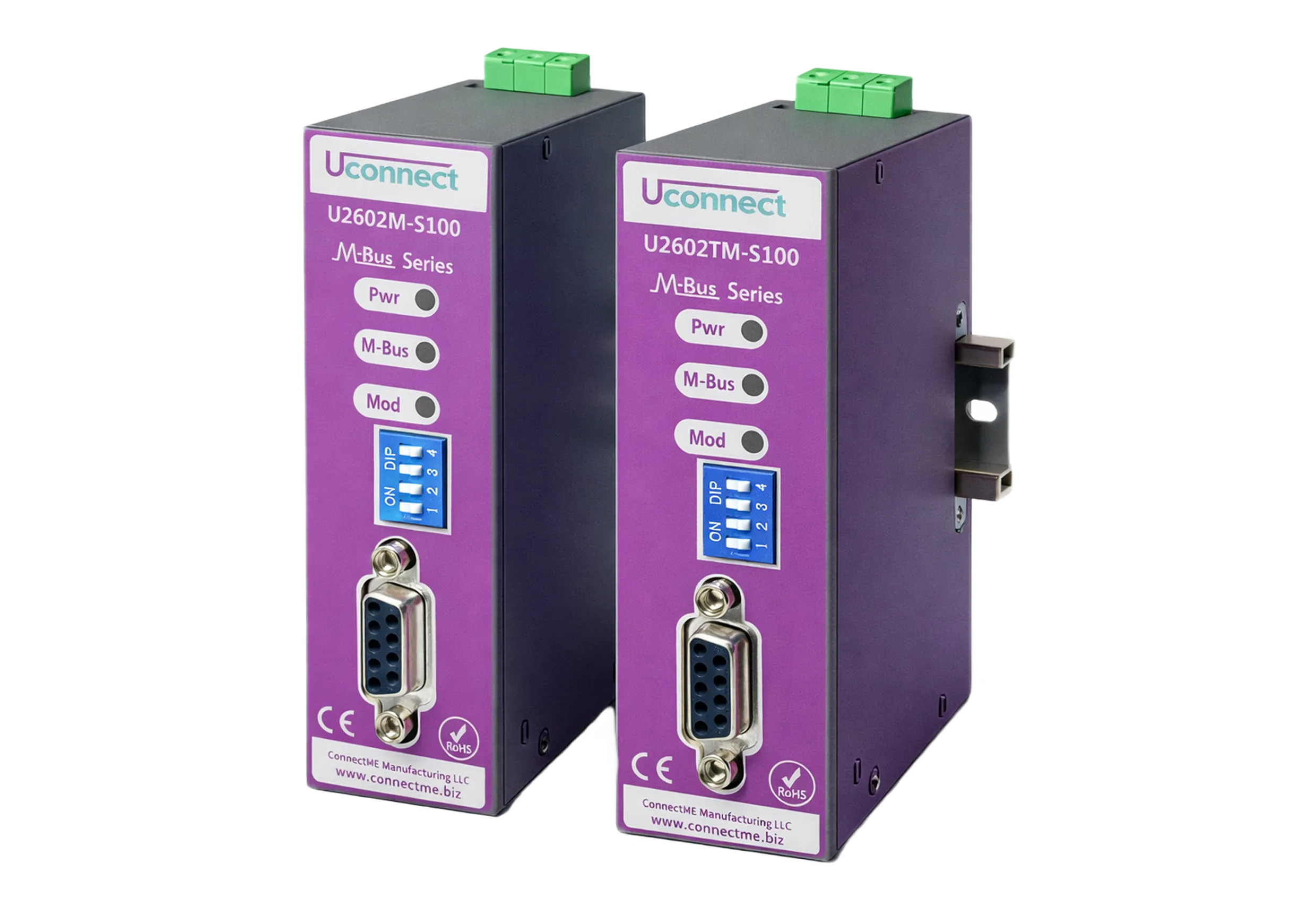
| M-Bus |
Meter data collection |
Wired bus with master and secondary devices; wireless variants use a different radio layer |
Primary or secondary address, records, units, tariffs, status, and read schedule |
Meter-focused data model and efficient collection of utility values |
Master capacity, cable design, addressing, telegram variation, and polling time must be engineered |
| Modbus RTU or TCP |
Device register access and industrial integration |
RS-485 multidrop or Ethernet client-server communication |
Register address, data type, byte order, scale, unit, write permission, and exception behavior |
Widely supported and straightforward when a controlled register map exists |
Registers have little meaning without current vendor documentation and agreed polling limits |
| BACnet/IP or MS/TP |
Building automation objects, alarms, trends, and supervisory integration |
Ethernet or token-passing field bus with BACnet devices and objects |
Device and object identifiers, object type, unit, priority, status flags, and change-of-value behavior |
Rich building-automation semantics and services for interoperable supervisory control |
Device IDs, network numbers, broadcast management, profiles, and writable priorities need governance |
| LoRaWAN |
Low-power wide-area transport for wireless meters and sensors |
End devices through gateways to a network server and application integration |
Device identity, payload codec, units, frame counters, timestamps, data rate, and application endpoint |
Long-range, low-power wireless coverage for suitable low-throughput telemetry |
Coverage, duty cycle, payload size, downlink limits, key ownership, and battery budget constrain design |