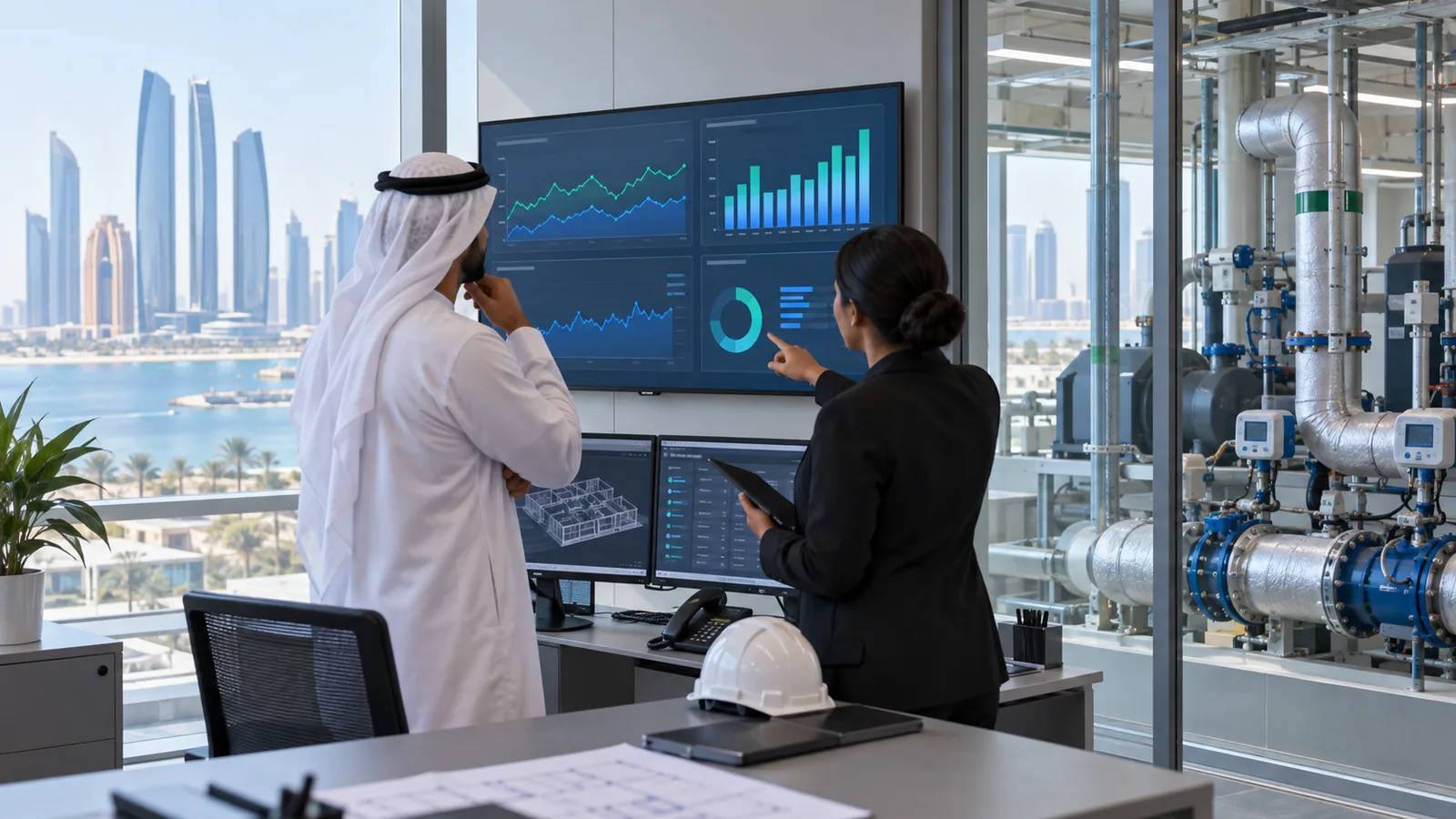
A smart-building programme is only useful when its data changes an operating decision. The 5th Abu Dhabi Smart City Summit took place on 30 September and 1 October 2026 at Dusit Thani Abu Dhabi. Its organiser framed the event around intelligent, sustainable and resilient city development, including AI, digital infrastructure, cybersecurity and public services. Those are event themes, not evidence that any particular building technology was deployed or endorsed.
Why this matters to an asset owner
City-level ambitions eventually meet a building-level question: can an owner identify what was consumed, where, when and why? An energy dashboard, leak alert or automated report may be valuable, but each depends on the physical meaning and quality of the underlying measurements. A portfolio that cannot distinguish a tenant meter from a plant meter cannot reliably compare assets or prioritise intervention.
Three decisions to connect to the data
- Where to investigate: compare normalised energy and water use across known boundaries before selecting a retrofit.
- When to act: combine interval readings and operating context to distinguish an abnormal condition from a scheduled load.
- How to verify: preserve the baseline, meter changes and correction history so a later result can be checked.
These are ConnectME's operational recommendations, not reported summit outcomes. They apply to smart metering, energy management and building integration projects. Owners should begin with one use case, a named decision maker and a documented data boundary rather than a city-scale technology claim.
Source context: the event dates, venue and programme themes come from the organiser's official summit site. The building-operations analysis is ConnectME's. The image is a generated illustration, not event photography.