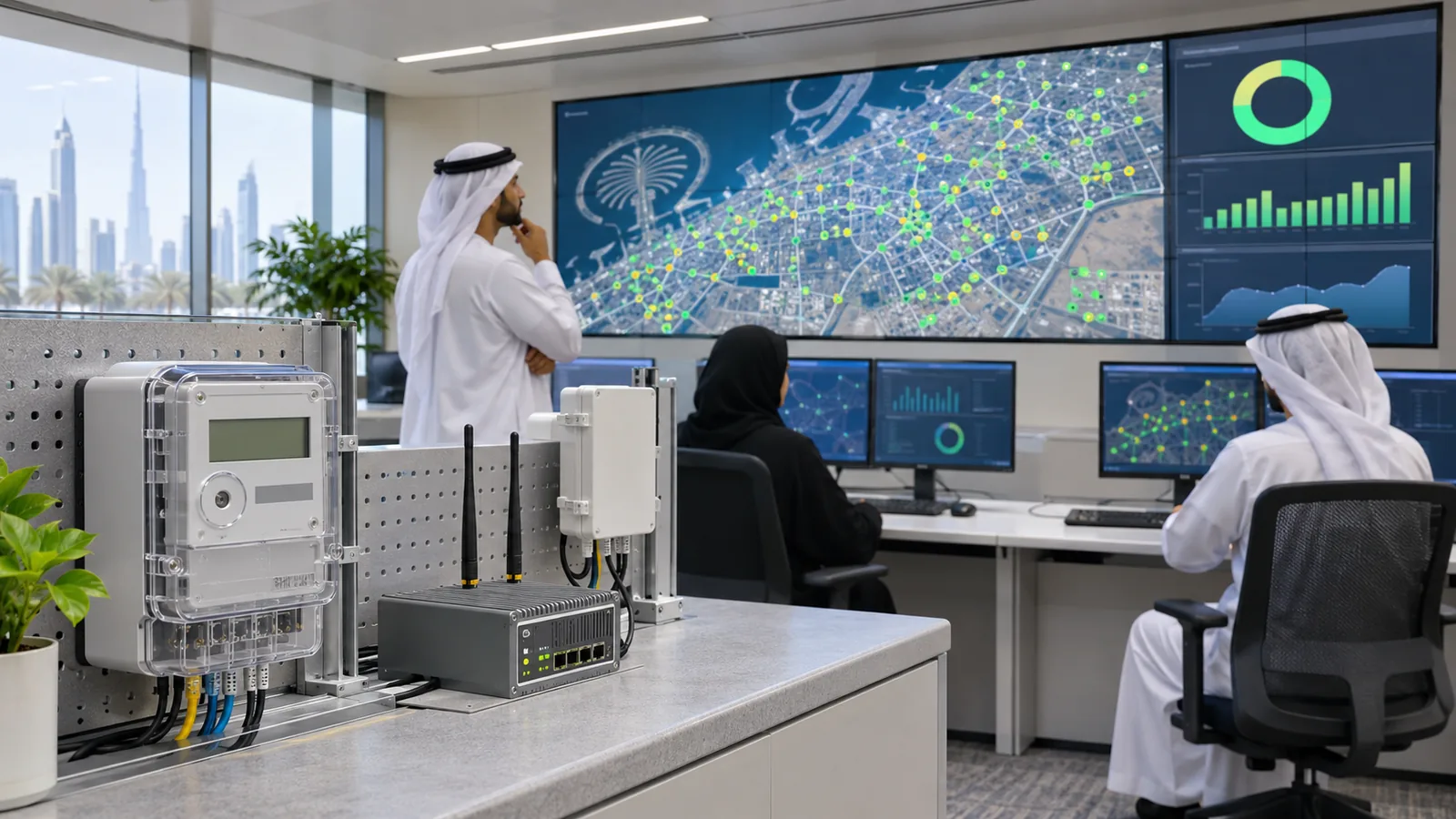
Metering becomes more useful when its data has an operational owner. In its 22 October WETEX 2026 showcase announcement, Dubai Electricity and Water Authority (DEWA) described its Distribution Network Smart Centre (DNSC). DEWA says the centre manages three smart initiatives, including advanced metering infrastructure (AMI) for electricity, alongside Shams Dubai and the EV Green Charger initiative.
Utility-scale example, building-scale question
DEWA's network centre is not a building-management system and its electricity AMI should not be read as a claim about a particular building's water or gas meters. The transferable question for a property owner is smaller: can a team trace an unusual reading from its physical meter through communications, software and a named person who can act on it?
Three controls worth checking
- Keep a current meter register linking each device to its location, served area, reading method and owner.
- Separate missing or late reads from genuine consumption changes before they reach a billing or performance report.
- Record who investigates exceptions and how corrected data is approved for reuse.
Those controls are ConnectME's building-operations interpretation of the announcement, not DEWA instructions or measured outcomes from the showcase. An AMR project becomes more dependable when the meter inventory and exception workflow are specified as clearly as the dashboard.
Source context: the DNSC and electricity AMI description comes from DEWA's 22 October 2026 announcement. ConnectME's building-level analysis was published 3 November 2026. The generated image is illustrative, not a photograph of DEWA or WETEX.