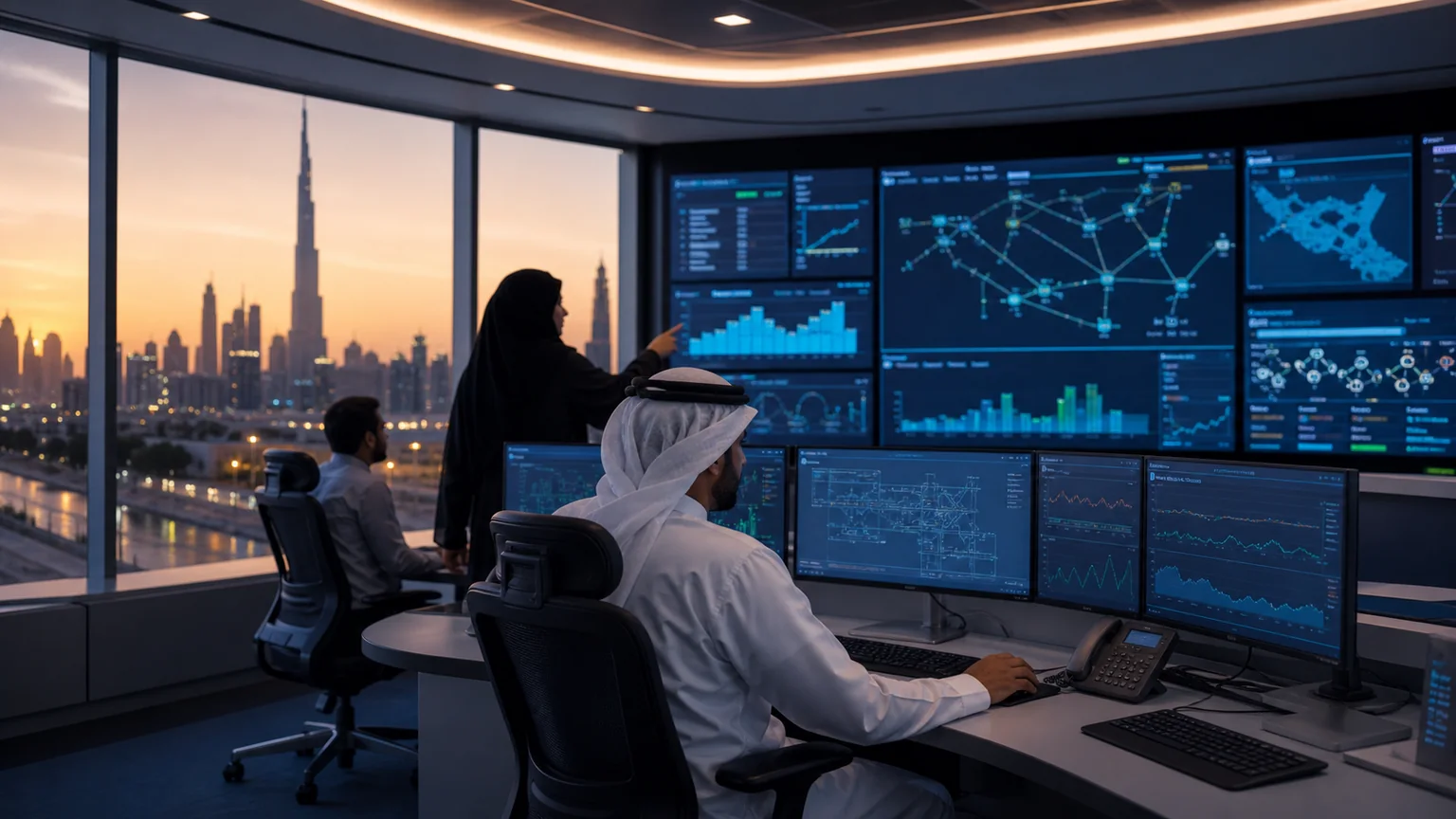
Dubai's latest utility performance figures offer a useful lesson for building owners and facility teams: operational intelligence becomes valuable only when the measurement and response chain is reliable. DEWA reports 0.82 customer minutes lost per year, electricity transmission and distribution losses of 2%, water network losses of 4.4%, and power-system reliability and availability above 99.99%.
The Numbers Behind the Headline
- 0.82 minutes: average annual customer minutes lost for electricity.
- 2%: electricity transmission and distribution network losses.
- 4.4%: reported water network losses.
- More than 99.99%: reliability and availability of Dubai's power system.
- AED 7 billion: planned Smart Grid Strategy investment through 2035.
These are network-level outcomes, not automatic targets for a commercial building. They do, however, show the operating discipline behind strong performance: accurate field data, automated monitoring, fast fault isolation and accountable response.
What Building Operators Can Borrow
A tower, mall or mixed-use community does not need utility-scale software to improve its own data quality. It needs a complete meter register, a known polling schedule, gateway-health alerts, validation rules for missing or abnormal readings, and named owners for every exception. That is the difference between collecting data and running an operational system.
Why Water Data Deserves Equal Attention
DEWA has also described a remote water-operations platform that can read and extract more than 150,000 database entries in under 30 seconds. The useful point is not the code volume or screen count. It is the ability to bring separate operational data sources into one resilient workflow for faster decisions.
ConnectME Relevance
ConnectME supports this meter-to-decision layer with smart water and BTU meters, AMR and MDMS validation, M-Bus and LoRaWAN gateways, protocol conversion, UBILL utility billing, leak detection and remote equipment monitoring for buildings and infrastructure projects across the UAE and GCC.
Source Context
This update uses figures published by DEWA in July 2026, supporting detail from DEWA's smart water-network monitoring update, and the IEA Energy Efficiency Policy Toolkit for buildings.