A benchmark becomes useful when an owner can explain the measurements behind it and decide what to change. The 15th Annual EmiratesGBC Congress is scheduled for 27-28 October 2026 in Dubai. Its announced themes include performance, data and disclosure; finance, policy and delivery; and resilience. The event has not yet taken place. This article is ConnectME's preparation guide, not a report of congress outcomes.
What the published benchmark can and cannot tell you
EmiratesGBC describes its 2026 Energy & Water Benchmark Report as a way to compare operating energy and water performance across building types. A portfolio owner should use a peer benchmark to identify a question, not to declare a saving. Different operating hours, occupancy, cooling boundaries and tenant loads can all change the result. The full report is access-controlled; ConnectME is not reproducing paywalled figures or asserting that a particular asset meets its thresholds.
Three decisions for the executive team
- Choose a boundary: document whether the comparison covers whole-building utilities, common areas, district-cooling delivery or tenant consumption.
- Test the evidence: reconcile meter IDs, units, reading periods and estimates before ranking sites or approving a retrofit.
- Assign an owner: decide who investigates an outlier and how a later improvement will be verified.
For UAE portfolios, automatic meter reading and energy management make this work faster when the physical meter register is correct. A useful first deliverable is a one-page evidence map for the highest-cost building: meter, served area, data source, exception owner and next decision.
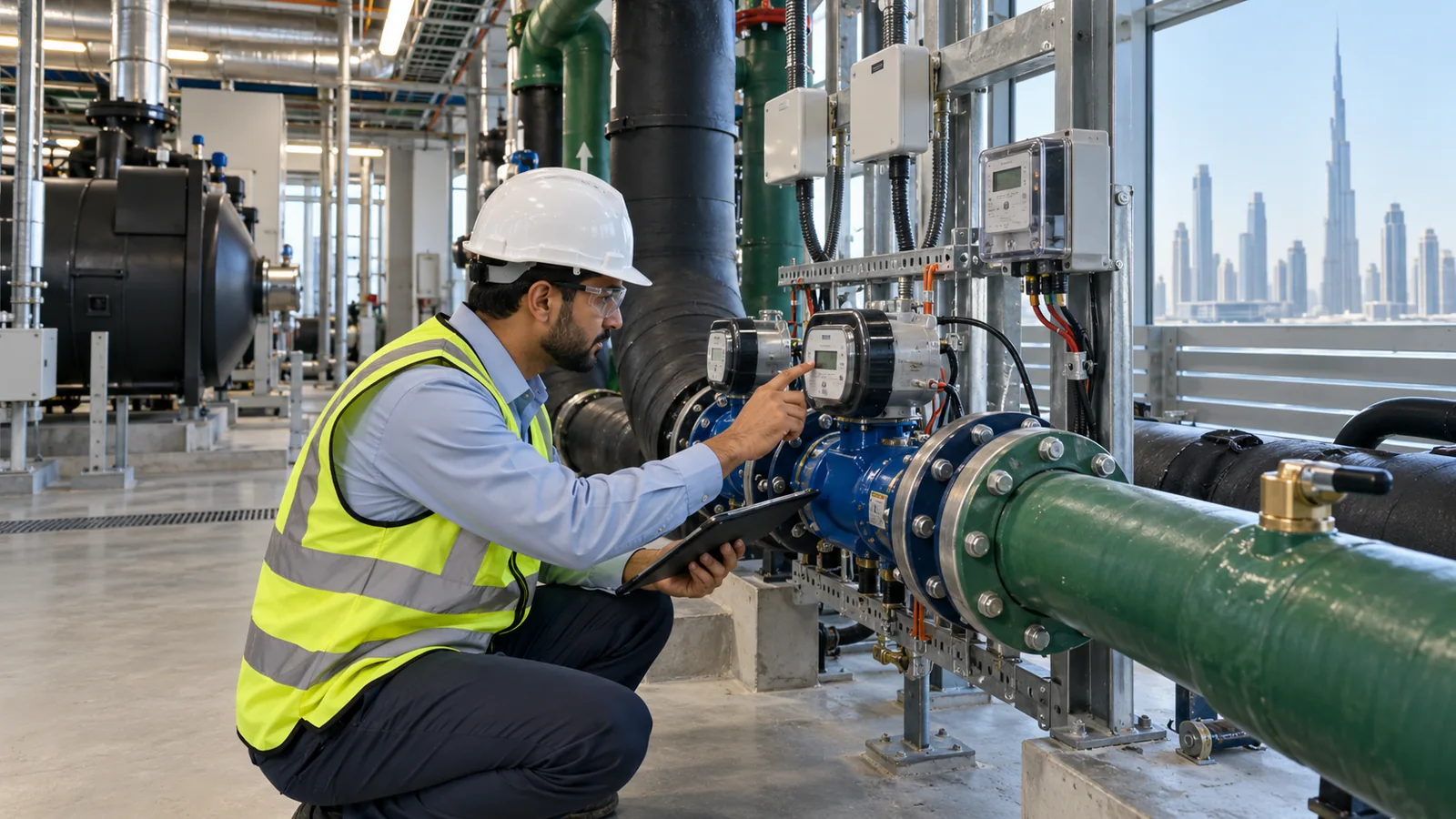
Source context: congress dates and themes come from EmiratesGBC's event page; the report's stated scope comes from its benchmarking programme. The recommendations are ConnectME analysis published 17 October 2026. The image is generated and illustrative, not a photograph of the congress or a named building.