Cooling performance claims need a defined boundary, source record and reporting period. Khazna Data Centers' first standalone ESG report offers a timely example: it discloses distinct 2025 measures for electricity used by mechanical cooling and for recycled water used in cooling. Those measures should not be collapsed into a single claim about an entire facility.
In its 6 October 2026 announcement, Khazna says carbon-free electricity covered 27% of the electricity used for its mechanical cooling load in 2025, through onsite solar and certified clean-energy instruments. It separately reports that 19.8% of cooling water needs were met with recycled water from treated sewage effluent. The company describes both as 2025 baseline disclosures, not as results for every UAE building or a guarantee of future performance.
Why the boundary matters to a chief executive
Electricity for mechanical cooling, whole-site electricity, cooling-water consumption and recycled-water share have different denominators. Confusing them can make a procurement case or sustainability report sound stronger than its evidence. Khazna's 2030 and 2035 carbon-free electricity ambitions are future goals; the 27% figure is a reported 2025 result for the cooling load only.
What an owner should ask the operations team
- Which meters define the cooling boundary, and who owns the meter register?
- Can electricity, BTU and make-up-water readings be reconciled to the same reporting period?
- Is recycled-water volume measured separately from total cooling-water demand?
- Are missing readings, estimates, meter replacements and changes in plant operation traceable?
- Does the report distinguish measured consumption from contractual clean-energy coverage?
These are ConnectME's practical questions for data-centre and district-cooling operators. They are not a claim that Khazna uses ConnectME equipment or that its reporting method is transferable unchanged to another asset.
What to do before the next reporting cycle
Start with one plant and document its incoming energy, delivered cooling, make-up water and relevant operating conditions. Validate timestamps and units before comparing months or sites. A connected BTU-meter estate, AMR data collection and energy management reporting can make the evidence usable, but only when the physical boundary and correction rules are agreed first.
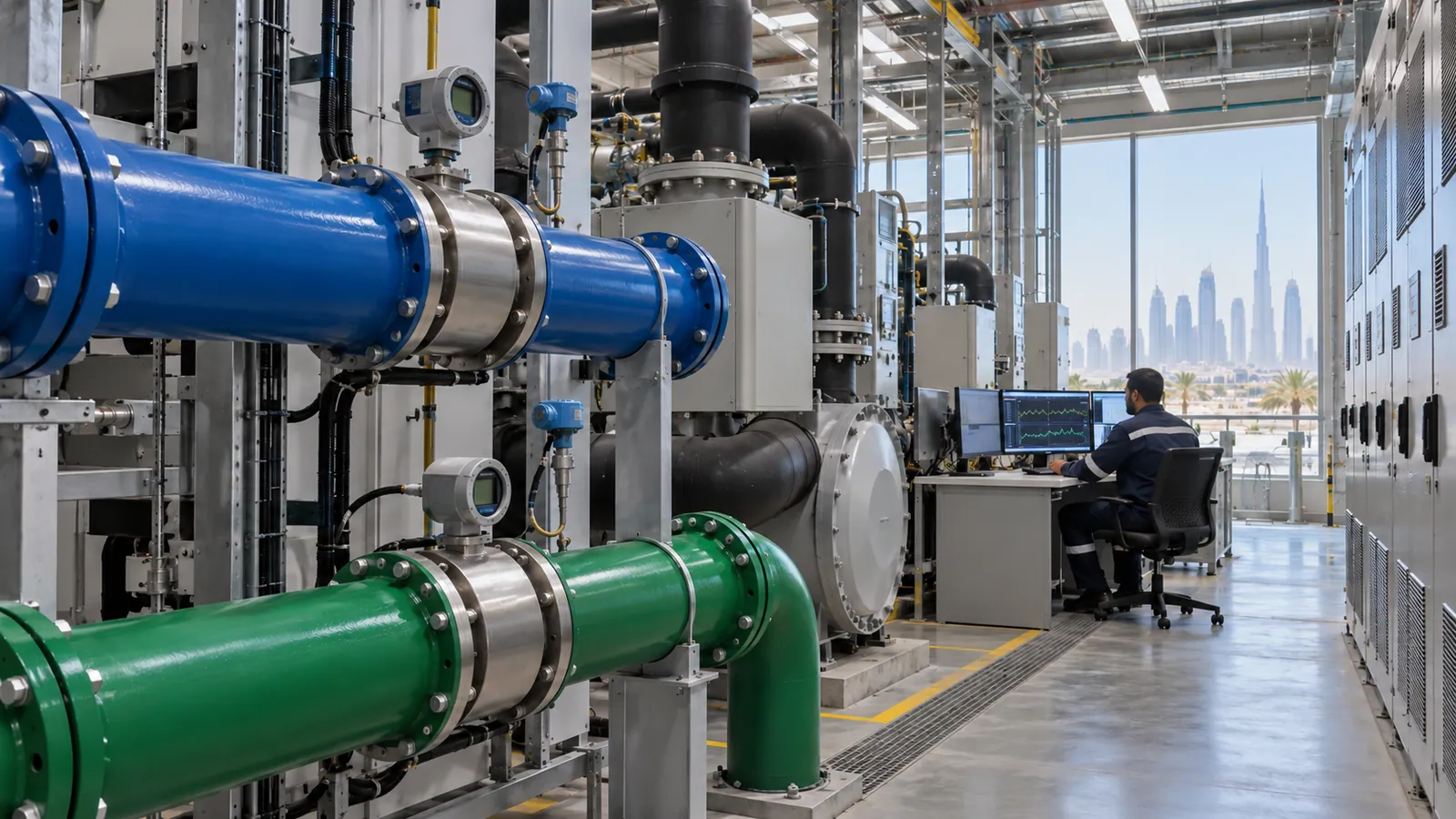
Source context: Khazna's company announcement was published 6 October 2026 and reports calendar-year 2025 data. This ConnectME analysis was published 13 October 2026. The image is an illustrative, generated plant-room scene, not documentary imagery of Khazna.