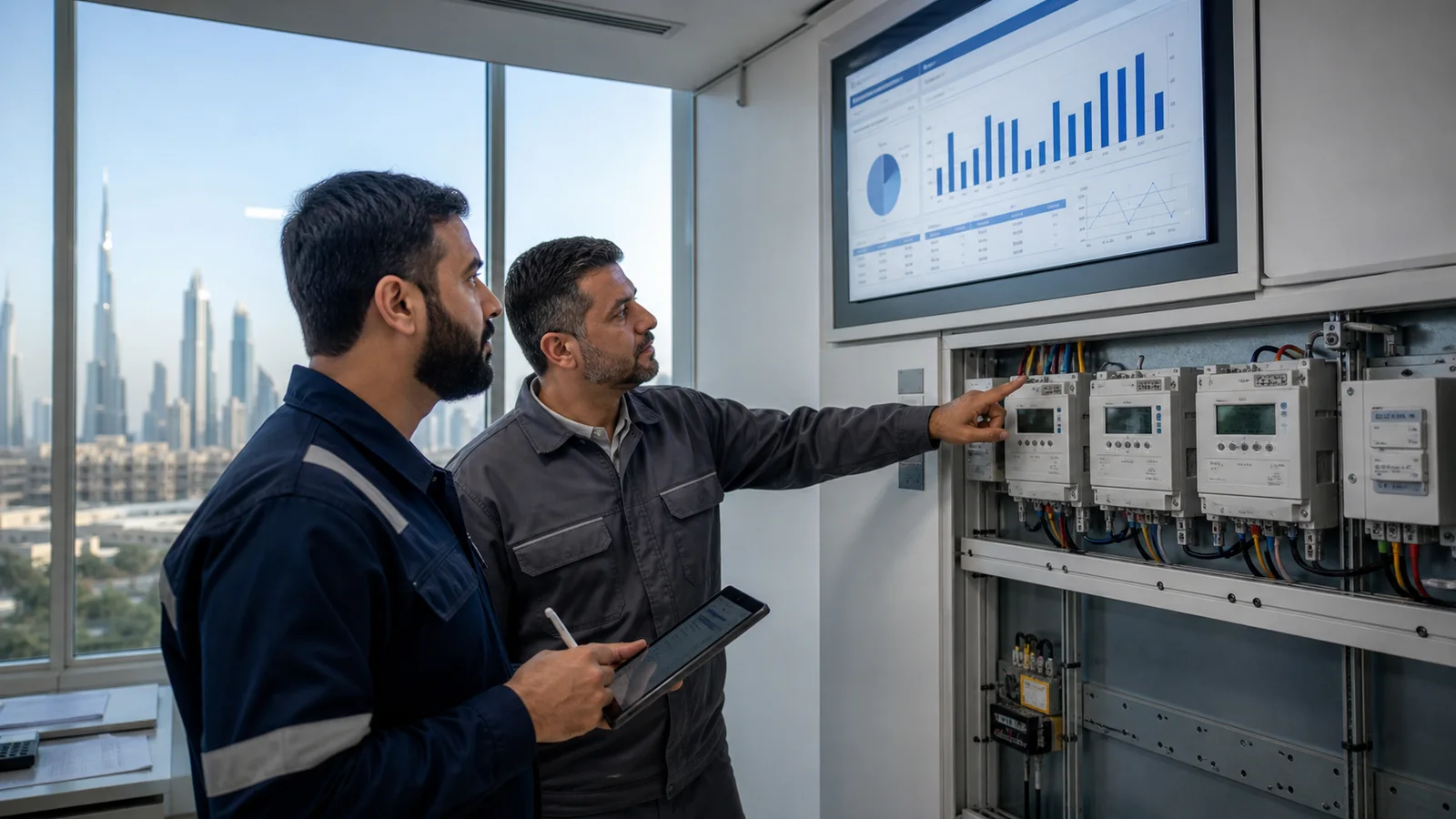
The UAE is putting implementation at the centre of the energy-efficiency conversation. On 2 September, the Ministry of Energy and Infrastructure convened the first Executive Technical Roundtable of the Global Energy Efficiency Alliance during Middle East Energy 2026 in Dubai.
The official update focused on practical and scalable solutions, technology validation, pilot projects, financing and partnerships capable of producing measurable improvements. A follow-up ministry statement on 3 September described efficiency as part of a cleaner, smarter and more resilient energy system, with benefits for costs, grid pressure, industrial productivity and energy security.
What Changed
- Government, industry, technology and finance representatives met around implementation rather than target-setting alone.
- The roundtable discussed validation, demonstration projects and routes to wider deployment.
- The Alliance's agenda links technical opportunities with implementation expertise and finance.
- Measurable and scalable outcomes were an explicit part of the official discussion.
The announcement does not create a new building rule, approve a specific technology or guarantee financing. It does show the evidence that serious efficiency projects increasingly need: a clear starting point, credible field measurements, an agreed method and a result that can be checked.
What This Means for UAE Building Owners
A proposal built only around estimated percentage savings is difficult to validate after installation. Owners can strengthen the case by defining the measurement boundary, checking the existing meters and gateways, recording operating conditions and agreeing how post-project performance will be compared with the baseline.
- Map the boundary: identify the building, plant or equipment affected by the proposed measure.
- Audit the data: check intervals, gaps, units, multipliers, timestamps and meter identity.
- Record operating context: keep relevant weather, occupancy, production or operating-hour information.
- Agree the method: define calculations, adjustments, assumptions and acceptance before implementation.
- Keep the evidence: preserve raw readings, corrections, commissioning tests and approval history.
Where ConnectME Fits
ConnectME supports the measurement layer with electricity, water and BTU meters, communications gateways, AMR, MDMS validation, energy management systems and technical integration. Building teams can use the new energy-efficiency baseline guide to review whether a proposed pilot or retrofit begins with evidence that can be verified later.
Source Context
This report uses the Emirates News Agency report on the 2 September 2026 GEEA roundtable and the 3 September Ministry of Energy and Infrastructure statement. The building-level interpretation and checklist are ConnectME's analysis; they are not government guidance or performance claims for ConnectME products.